

The Problem
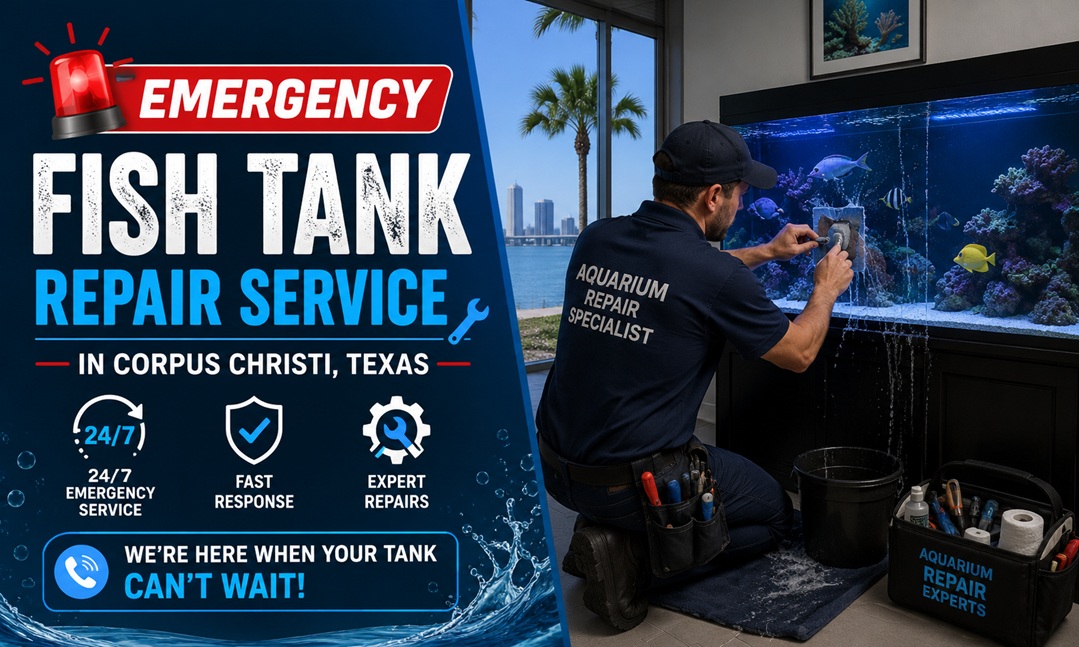
It is 11 p.m. You hear a strange sound, walk into the living room, and find a slow trickle running down the side of your aquarium. If you live in Corpus Christi and keep a saltwater tank, this scenario is more common than you might think. The Gulf Coast climate — high humidity, salt air, and temperature swings — puts unusual stress on tank seals, silicone joints, and acrylic panels over time.
Emergency fish tank repair in Corpus Christi means finding fast, qualified help to stop leaks, replace failed equipment, or temporarily relocate fish before a partial or full tank failure causes serious damage to your floor, your furniture, and the animals themselves.
Common Tank Emergencies You May Face
Not every crisis looks the same. A few of the most frequent problems Corpus Christi aquarists deal with:
- Leaking seams — silicone joints degrade faster in coastal humidity. A seal that looked fine last year may be weeping today.
- Cracked glass or acrylic — impact damage or thermal stress from AC cycling in summer.
- Pump or filter failure — electrical failures are especially risky during storm season when power surges are common.
- Saltwater corrosion damage — metal components near saltwater systems corrode faster in South Texas coastal conditions.
What to Do Right Now (Before the Technician Arrives)
Speed matters. While you wait for emergency repair help, take these steps:
- Turn off all electrical equipment connected to the tank — pumps, heaters, lighting.
- Prepare a clean bucket or spare container with aged or treated water to temporarily house your fish.
- If the leak is slow, place towels or a tub underneath and drain water to reduce pressure on the damaged area.
- Take photos — useful for insurance claims and for showing the technician what happened.
- Call a local fish store or aquarium service. Even if they cannot come immediately, most can advise you over the phone.
Finding Emergency Aquarium Repair in Corpus Christi
Your best bets for emergency help locally are aquarium specialty shops, mobile aquarium maintenance services, and experienced hobbyists who advertise on local Facebook groups and Nextdoor. When you call, ask:
- Do they work on saltwater systems? (Not all freshwater techs do.)
- Can they come same-day or within a few hours?
- What do they charge for emergency calls versus standard visits?
Why the Gulf Coast Makes This Different
Corpus Christi sits on the Gulf of Mexico, and that matters for tank owners in ways people from inland Texas do not always anticipate. Salt air accelerates metal corrosion. Humidity levels stay high for most of the year, which softens silicone over time. And the city has a strong local culture of reef and marine aquariums — large, expensive setups with live coral and rare fish that cannot simply be scooped into a bucket for a few days without loss.
Local aquarium services here tend to have more experience with saltwater emergencies than shops you might find in, say, Dallas or Lubbock. That specialization is worth asking about directly.
Frequently Asked Questions
How much does emergency fish tank repair cost in Corpus Christi?
Emergency service calls typically run 1.5 to 2 times the standard rate, depending on the provider and time of day. A basic seal replacement might cost $75 to $150 in labor. Full glass replacement or custom acrylic work can run several hundred dollars. Always get a quote before work begins.
Can a cracked fish tank be saved?
It depends on the crack. A minor surface scratch in acrylic is often repairable. A structural crack in glass usually means the panel needs replacing. A qualified technician can assess whether repair or replacement makes more sense, though in most emergency cases the fish need to be moved first regardless.
Does homeowners insurance cover aquarium damage?
Some policies cover water damage caused by a broken aquarium, but fish and equipment are rarely covered directly. Check your policy’s coverage for “sudden and accidental” water discharge — many standard homeowners policies include it, while renters insurance policies vary widely.