

Veterinary practices in the UK see a predictable surge of digestive emergencies every December, and a smaller version of the same pattern around Easter, summer barbecues and every long bank holiday weekend. The reasons are not mysterious. Houses fill with food, routines fall apart, visitors arrive with good intentions and loose hands, bins overflow, and dogs that are normally fed sensibly find themselves eating turkey skin, pigs in blankets, Christmas cake, chocolate coins and, in the worst cases, cooked bones and mince pies. Some of this causes an unpleasant few days. Some of it is dangerous.
This guide is for UK owners who want to get through the festive periods without a trip to the emergency vet. It covers the foods and hazards that cause upset stomachs and poisoning at this time of year, the effect of disrupted routines and stress on a dog’s digestion, how to manage a household full of guests, and how to support the gut through a season of temptation, including the sensible use of Dog Probiotics as part of the daily routine. It also sets out plainly what such products can and cannot do under UK rules.
The Festive Foods That Cause Upset Stomachs
Fatty food is the most common cause of Christmas digestive trouble. Turkey skin, goose fat, roast potatoes, gravy, stuffing, pigs in blankets, cheese boards and buttery leftovers deliver far more fat than a dog’s digestion is used to, and the results range from diarrhoea and vomiting to pancreatitis, a painful and potentially life-threatening inflammation of the pancreas. Dogs that are overweight, older, or of breeds such as Miniature Schnauzers and Cocker Spaniels are at particular risk, and a dog that has had pancreatitis once is at high risk of a repeat.
Rich, unfamiliar and sugary foods cause upsets in their own right. Christmas pudding, cake, trifle, cream, and sweets are all outside a dog’s normal diet. Even a large amount of plain turkey, if it is far more meat than the dog usually eats in a day, can produce loose stools. Cooked bones from the turkey, ham or roast splinter and can pierce or block the gut; they must go straight into a secured bin, not into the dog.
The Festive Foods That Poison
Some seasonal foods are toxic rather than merely rich, and these are the ones that fill emergency waiting rooms. Chocolate, especially dark and cooking chocolate, contains theobromine, which dogs cannot metabolise well; advent calendars, tree decorations, selection boxes and gift-wrapped boxes under the tree are all common sources. Grapes, raisins, sultanas and currants can cause kidney failure in some dogs even in small amounts, and they are found in mince pies, Christmas pudding, Christmas cake, stollen, panettone and hot cross buns at Easter. Onions, garlic, leeks and chives, in stuffing, gravy, sage and onion mixes and many leftovers, damage red blood cells. Macadamia nuts cause weakness and tremors. Xylitol, a sweetener in sugar-free sweets, chewing gum, some peanut butters and baked goods, causes a dangerous drop in blood sugar and liver damage. Alcohol, including in trifle, Christmas cake and unattended glasses, and blue cheese, which contains a mould toxin, are also hazards.
If you know or suspect your dog has eaten any of these, ring your vet or the emergency service immediately, before signs appear. Early treatment is far more effective, and waiting to see what happens can turn a manageable situation into a serious one. Keep packaging so the vet can assess the amount.
Non-Food Hazards
Christmas trees drop needles that irritate the mouth and stomach; tree water treated with preservatives can be toxic. Tinsel, ribbon, baubles, fairy lights, batteries and small toys are all swallowed by curious dogs and can cause obstruction or worse. Poinsettia, holly, mistletoe, ivy and lilies are toxic to varying degrees. Easter brings chocolate eggs hidden in gardens, spring bulbs and lilies. Summer barbecues bring corn cobs, which are a notorious cause of intestinal obstruction, skewers, fatty drippings and discarded bones. Bonfire Night adds fireworks stress on top of everything else.
Routine, Stress and the Gut
Alongside the food, the festive season disrupts the routines that keep a dog’s digestion steady. Walks happen at odd times or not at all, meals are late, the house is full of noise and strangers, the dog is either overstimulated or shut away, and it may be taken to unfamiliar houses or boarded while the family travels. Stress affects the gut through the nervous system, slowing the stomach and speeding the bowel, and stress-related diarrhoea over Christmas is very common even in dogs that have not eaten anything unusual. Combine a disturbed routine, a stressed dog and a diet suddenly full of fat and sugar, and the gut microbiome, the community of bacteria that keeps digestion running smoothly, is thrown badly off balance.
Managing the Household
Prevention is largely about people and bins. Before guests arrive, agree as a household that the dog will not be fed from plates, and say so to visitors, kindly but clearly; children and grandparents are the usual weak points. Put a jar of the dog’s own safe treats where guests can reach it, so that anyone who wants to give the dog something has a harmless option. Keep the dog out of the kitchen during cooking and out of the dining room during meals, or give it a stuffed food toy in a quiet room so it is occupied and settled while people eat.
Secure the bins with locking lids or keep them behind closed doors, and take rubbish out promptly. Never leave plates, platters or leftovers on low tables. Keep chocolate, sweets and edible gifts off the floor and off the tree, and tell family not to put edible presents under it. Clear the table and worktops before leaving the room. Fence off the tree if the dog shows interest, keep decorations out of reach, and check the garden for hazards before letting the dog out unsupervised.
Keep the routine as normal as you can: walk and feed at the usual times, give the dog a quiet space to retreat to, and do not skip exercise because the day is busy, since a tired dog is a calmer and less inquisitive one. If travelling or boarding, plan well ahead, send the dog’s own food and written instructions, and avoid changing diet at the same time as everything else.
Supporting the Gut Through the Season
Even with careful management, the festive period is a time of raised risk for a dog’s digestion, and many owners choose to support the gut in advance. The first step is feeding: keep the dog on its usual complete diet at the usual amounts, and if you want it to share the occasion, offer a little plain cooked turkey breast, without skin, gravy or stuffing, or a few plain vegetables, within its normal calorie allowance. That is enough of a treat for any dog.
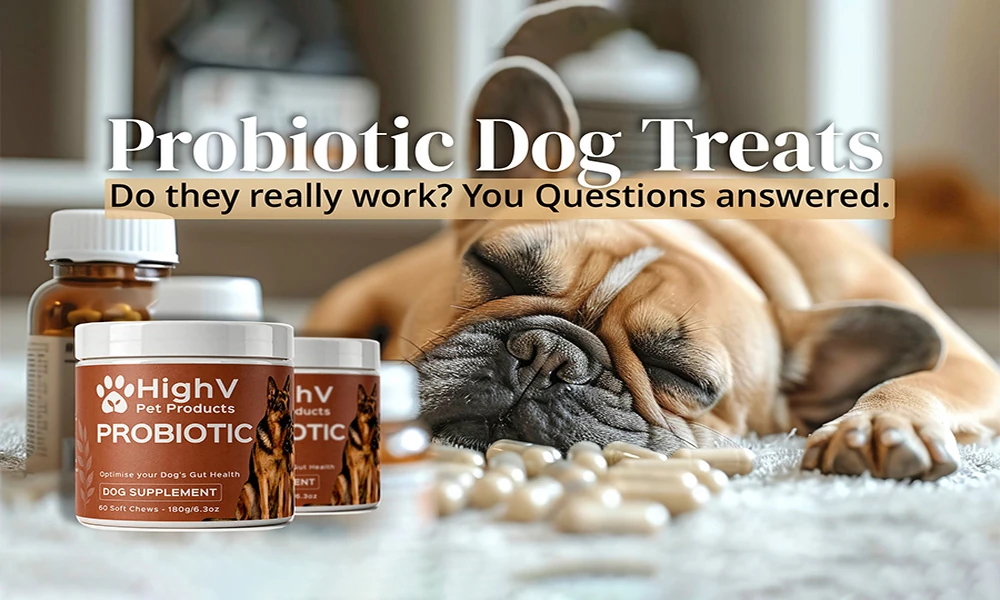
The second step, for many owners, is a probiotic. In the UK, probiotics fed to dogs are regulated as feed additives in the gut flora stabiliser category, and only authorised strains, most commonly a specific strain of Enterococcus faecium, may be used. Products containing them, whether treats, chews, powders or pastes, are complementary pet foods. Feeding an authorised probiotic daily supports the normal balance of gut bacteria, and starting two to three weeks before the festive period, then continuing through it and for a couple of weeks afterwards, gives consistent support across the time when the gut is under most pressure. A treat-style product fits neatly into a season when the dog will be watching everyone else eat.
The limits need to be stated clearly. A probiotic product is not a veterinary medicine, holds no marketing authorisation from the Veterinary Medicines Directorate, and cannot claim to treat, cure or prevent any condition. It does not protect against chocolate, raisins or fatty food, does not treat pancreatitis, and does not make it safe to feed a dog from the table. A responsibly labelled product will describe itself as supporting normal digestive function or helping to maintain a balanced gut flora, and that is what it does. Choose one with a named strain, a live count guaranteed to the end of shelf life, a simple recipe with no added sugar, and a feeding guide by weight; store it as directed and keep it within your dog’s treat allowance.
When to Ring the Vet
Find out before the holidays how your practice handles out-of-hours emergencies and keep the number by the phone. Ring immediately if your dog has eaten chocolate, grapes, raisins, dried fruit, onions, xylitol, macadamia nuts, alcohol, mouldy food, cooked bones, corn cobs or decorations, or anything you are unsure about. Ring the same day for vomiting or diarrhoea lasting more than 24 hours, blood in vomit or stools, a swollen or painful abdomen, a hunched posture, lethargy, refusal of water, tremors or weakness, or repeated unproductive retching, which can indicate bloat and is an emergency. Puppies, elderly dogs and dogs with existing conditions should be seen sooner rather than later.
Summary
Festive periods combine rich, fatty and sometimes toxic food with disrupted routines, visitors and stress, and the result is a predictable rise in digestive upsets and poisonings among UK dogs. Fatty leftovers, cooked bones, chocolate, dried fruit, onions, xylitol, alcohol and decorations are the main hazards, and the most effective protection is a household that agrees not to feed the dog from the table, secures its bins and keeps temptations out of reach. Keeping walks and meals on schedule, giving the dog a quiet space and planning any boarding well ahead reduces stress. Feeding the usual diet and, for many owners, an authorised probiotic daily from a few weeks before the season provides steady support for the gut, provided everyone remembers that these are complementary pet foods that support normal digestive function, not medicines, and offer no protection against poisons. Know your vet’s emergency number, act early if something is eaten, and Christmas can be as happy for the dog as for everyone else.