

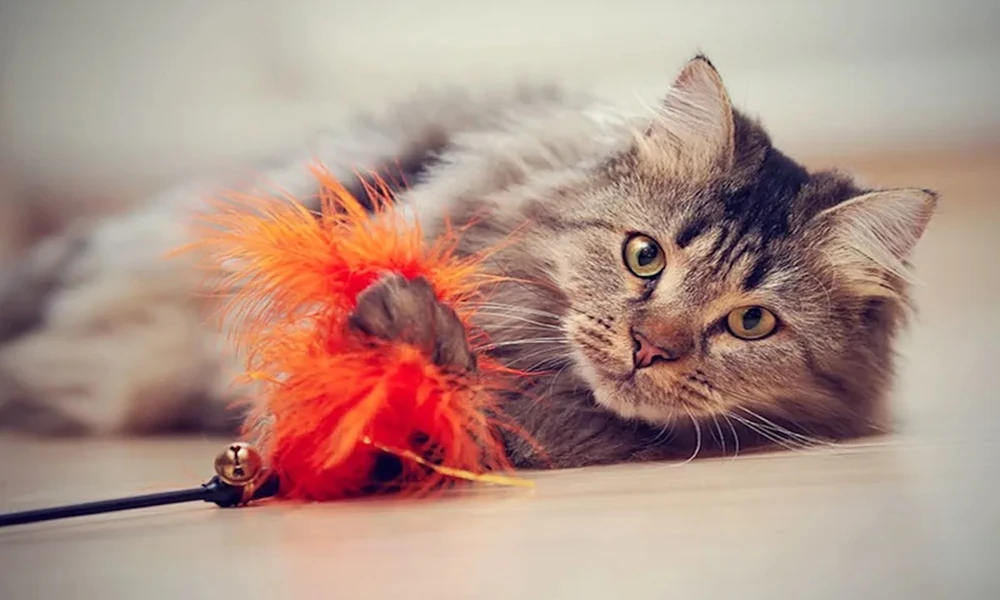
Indoor cats need daily play to stay physically fit and mentally stimulated, and the right mix of toys for cats makes that possible without a yard to explore. Choosing the best catnip toys is a great starting point for most cats, but a well-rounded toy rotation such as chase toys, puzzle feeders, and scratch-friendly options keeps boredom and destructive behavior at bay.
What Toys Do Indoor Cats Actually Need?
Indoor cats miss out on the natural hunting, stalking, and exploring that outdoor cats get for free. Toys for cats aren’t just entertainment; they replace that missing stimulation and help prevent weight gain, anxiety, and furniture damage.
Most indoor cats do best with a mix across these categories:
- Chase toys – Wand toys, feather teasers, motorized mice.
- Batting toys – Balls, crinkle toys, small plush mice.
- Scent-driven toys – Catnip toys, silvervine toys.
- Puzzle toys – Treat-dispensing balls, snuffle mats.
What Toy Do Cats Like the Most?
There’s no single answer here, since every cat has its own preferences. But patterns show up again and again.
Most cats respond best to toys that mimic prey. That means:
- Small size, roughly mouse- or bird-sized.
- Quick, erratic movement.
- Feathers, fur, or crinkly texture.
- Something they can actually catch and “kill”.
Wand toys top the list for most vets and behaviorists. VCA Animal Hospitals notes that predatory play works best with toys your cat can actually catch, such as small toy mice or bits of paper dragged on a string, rather than toys that can never be “caught,” such as laser pointers used alone.
Types of Toys for Cats: A Comparison
Here’s a simple breakdown of the main categories of cat toys and what each one is good for.
| Toy Type | Best For | Needs Supervision? |
| Wand/feather toys | Interactive play, exercise | Yes |
| Catnip toys | Solo play, enrichment | Occasionally |
| Puzzle feeders | Mental stimulation, slower eating | No |
| Balls/kickers | Independent play, batting | No |
| Motorized toys | Solo stimulation when you’re away | Yes, at first |
| Tunnels | Hiding, chasing, ambush play | No |
A well-rounded toy box usually has a mix from each row. Rotating them every few days also keeps your cat curious, since cats tend to lose interest in toys that stay out too long
Are Catnip Toys Good for Cats?
Yes, for most cats. Catnip is non-toxic and considered safe by veterinarians. It contains a compound called nepetalactone, which triggers a short burst of excitement, rolling, or relaxation in cats that carry the sensitivity gene.
This is exactly why the best catnip toys are such a popular starting point for new cat owners. They’re low-cost, they don’t need batteries, and most cats respond to them right away.
| Toy Type | Why It Works | Best For |
| Catnip-filled mice | Small size mimics real prey | Solo play, batting |
| Catnip kickers | Long shape for back-leg “bunny kicking” | Aggressive play, energy release |
| Refillable catnip toys | Pouch design lets you top up fresh catnip | Long-term use, cost savings |
| Catnip-sprayed scratchers | Combines scratching outlet with scent draw | Redirecting furniture scratching |
| Catnip balls | Rolls unpredictably, encourages chasing | Multi-cat households |
When shopping for the best catnip toys, look for pure dried catnip (not just “catnip scent”) listed in the materials, and pick refillable designs so the toy stays effective after the first few sessions as sprayed-on scent fades fast.
How Long Should You Let a Cat Play With a Catnip Toy?
The effects of catnip are short-lived. Most cats respond for around 10 to 15 minutes, then lose interest as their brain receptors temporarily stop responding. It typically takes 30 minutes to two hours before a cat becomes sensitive to catnip again.
Because of this reset period, there’s no need to limit playtime with the toy itself. Your cat will naturally walk away when the effect wears off. Just don’t expect round two right away.
What Other Toys for Cats Should You Rotate In?
Even cats that love catnip toys benefit from variety, since any single toy tends to lose its novelty within a few weeks. Rotating toys for cats every 5-7 days keeps play sessions fresh and prevents your cat from losing interest in a favorite too quickly.
Toys for cats worth keeping in regular rotation include:
- Wand toys for 10-15 minutes of supervised, interactive play daily.
- Treat-dispensing puzzle toys for solo mental stimulation.
- Crinkle balls and lightweight mice for solo batting play.
- A scratching post paired with a hanging toy to combine two instincts at once.
How Do You Choose Toys for Indoor Cats by Play Style?
Not every cat plays the same way, so matching toys for cats to your individual cat’s habits gets better results than buying at random.
| Play Style | Signs to Watch For | Recommended Toy Type |
| Hunter/stalker | Crouches, watches, ambushes | Wand toys, motorized mice |
| Batter | Swats objects off surfaces | Balls, crinkle toys |
| Chewer | Chews cords, fabric, plants | Catnip kickers, silicone chew toys |
| Cuddler/kneader | Kneads blankets, low energy | Soft catnip plushies |
| Problem-solver | Investigates, paws at containers | Puzzle feeders, snuffle mats |
How Do You Keep Cats Safe While Playing With Toys?
Toy safety matters as much as toy selection, especially in multi-cat or kitten households. Keep these points in mind:
- Supervise play with wand toys and string-based toys as string and ribbon can cause serious internal injury if swallowed.
- Check catnip and plush toys regularly for loose seams, small parts, or bells that could come loose.
- Store string, elastic, or yarn-based toys away from unsupervised cats.
- Introduce a new toy one at a time so you can spot any adverse reaction.
- Rotate out any toy that’s frayed, torn, or missing stuffing.
Conclusion
Building a toy rotation for an indoor cat doesn’t need to be complicated. Start with a couple of the catnip toys to tap into natural hunting instincts, then round things out with wand toys, puzzle feeders, and a scratch-friendly option or two. Watching how your cat actually plays like stalking, batting, chewing, or kneading is the fastest way to figure out which toys for cats will get used instead of ignored after week one.
FAQs
Q. What Toy Do Cats Like The Most?
There’s no single favorite across all cats; it depends on individual play style and catnip sensitivity. Wand toys tend to be the most universally engaging since they mimic live prey movement, while catnip toys are a close second for the roughly two-thirds of cats genetically wired to respond to them.
Q. What Are The Best Toys To Keep Cats Entertained?
A rotation beats any single toy. Combine a wand toy for supervised interactive play, a puzzle feeder for solo mental stimulation, and a catnip toy for independent play. Swapping toys every 5-7 days keeps novelty high and prevents your cat from losing interest in the whole toy box.
Q. Are Catnip Toys Good For Cats?
Yes, for the roughly two out of three cats that respond to catnip, these toys are a safe, effective way to encourage exercise and natural hunting behavior. Catnip itself is non-toxic, though toys should still be checked regularly for loose parts or fraying.
Q. How Long Should You Let A Cat Play With A Catnip Toy?
Most cats naturally self-limit, playing intensely for about 10 minutes before losing interest or becoming mellow. There’s no strict time cap needed, but offering catnip toys a few times a week rather than constantly helps prevent your cat from becoming less responsive to the scent over time.
Q. Can I Leave My Cat With A Catnip Toy?
Yes, catnip itself is safe to leave with your cat unsupervised, but check the toy’s construction first. Remove toys with loose bells, ribbons, string, or small parts that could be chewed off and swallowed, and reserve those for supervised play sessions only.